Showing posts with label April. Show all posts

Cradle Mountains, Tasmania - A Wilderness Vision

The Cradle Mountain-Lake St Clair National Park is one of the iconic national park in Australian island of Tasmania. Covering an area of 1280 sq. km., the national park contains some of the spectacular scenery and it is listed as UNESCO World Heritage Area. The Park actually is two, Lake St. Clair on the south-east side is the main attraction and starting point for Tasmania's most famous walks including the famous The Overland Track. While Cradle Mountain on the northern end has some of the incredible scenery.

The jagged contours of Cradle Mountain epitomize the feel of a wild landscape, while ancient rain forest and alpine heath-lands, button-grass and stands of colorful deciduous beech provide a range of environments to explore. Icy streams cascading out of rugged mountains, stands of ancient pines mirrored in the still waters of glacial lakes and a wealth of wildlife ensure there is always something to captivate you. 
Photo Credits: hobartcampervanhire.com
 Hiking is one of the major activity in the Park. Overland Track, a 80 km walk between Cradle Mountains and lake St Clair, is the most beautiful walking trail of the Park. There are guided tours for the walk, including stays at catered huts on the way and can be done in 6 days. If you are short of time, there are several small tracks.

Visit:
1. Avoid Winter months of June, July and August
2. During April, you can see the spectacular changing colors of the deciduous beech

Attractions:
1.Climb Mt Ossa, Tasmania’s highest mountain and visit the fairytale D'Alton, Fergusson and Hartnett waterfalls
2. Cruise along Lake St Clair, Tasmania’s deepest lake and a walk past highland lakes and rivers
3.  Explore magical myrtle forests and see a species of beech tree more than 60 million years old
4. Trek to the top of Cradle Mountain through button grass plains and herb meadows.  From the 1,545 meter summit, you can look out over Dove and Crater Lakes Crater Lake and see valleys, plateaus, heaths and forests stretching for around 80 kilometers
5. Watch out for Padmelons, Bennett's wallabies, wombats and possums
6. If you are interested in the natural history of the park, you can enjoy the displays and interpretation at the Visitor Center, which you will pass as you travel towards Dove Lake
Photo Credits: journals.worldnomads.com
Accessibility: 
Cradle Mountains (Northern End): Devonport, Deloraine or Launceston
Lake St. Clair (Southern End): Derwent Bridge on the Lyell Highways between Queenstown and Hobart.

Accommodation:  
Plenty of accommodations are available for the tourists of this park

Tips:
1. Walkers are limited for environmental reasons so you’ll need to book with Tasmania Parks and Wildlife Service in advance.
2. Feeding animals is strictly prohibited in the park and a large fine amount is imposed if caught feeding animals.
3. Climate in the region is unpredictable and wet weather is very common. Hence suitable gears is recommended.

Damascus "World's Oldest Continously Inhabited city"

Damascus, the capital city of Syria, is believed to be established between 10,000 to 8,000BC. Amidst all the controversial explanation for the etymological origin of "Damascus", the city has greater significance. Under the Romans, Damascus was a chief town and later a fortress of Bilad-Al-Sham and also a passage to Mecca. The old-walled city of Damascus still preserves its historical aspect and gives an ancient feel with its narrow puzzling alleys, verdant courtyards, bazaars, minarets, mosques, street-cart vendors and coffee houses. Damascus city is also an UNESCO world heritage site.
Photo Credits: www.worldofmosques.com
Facts:
Currency: Syrian Pound or Lira [10 SYP = Rs. 9 at the time of post]
Language: Arabic
Time Difference: 2 1/2 behind IST
Best Time to Visit: March-May, Sep-Nov

Get-in:
Visa: Indian Nationals should obtain an visa before entering the country.
Flights: There no direct flights from India. Major transits are Dubai, Qatar, Turkey and Bahrain. Major middle-east airlines fly between the transits.
Trains: There are also trains between Turkey and Damascus. Seat61 can provide all the information.
Buses: Damascus can also reached in bus from Jordan, Turkey and Lebanon

Getting Around:
Taxi is the major mode of transportation. 
Photo Credits: doctormobiles.blogspot.com
Attractions:
Below the must-see sights in Damascus:
1. Azzam Palace 
2. Umayyad Mosque
3. National Muesum
4. Sayyida Ruqayya Mausoleum - Persian-Iraqi Architecture
5. Souq al-Bizuriyyah - Spice Bazaar
6. Khan As'ad Pasha, a cathedral from Khans
7. Chapels of Ananias
8. Souq al-Hamidiyya - a old narrow bazaar
9. Citadel
10. Mount Qasioun

Do:
1. Bath in a Hammam, Turkish bath.
2. Relax at a Hooka cafe
3. Taste the popular Shawarma

Tips:
1. Please check travel advisory before planning the trip
Side-Trips:
1. Homs - an ancient city by the river Orontes
2. Bosra - a Roman city 

Cruising the Romantic Rhine River

Rhine river is one of the longest river in Europe which originates from the Swiss alps and flows into Germany, France, Netherlands and Austria. The picturesque canals, pristine landscape, countless vineyards, famous monasteries, beautiful castles and calm villages along the banks of the river makes the Rhine River Cruise the most popular and romantic cruise in Europe. 
Photo Credits:www.european-traveler.com
Typical Rhine river cruise departs from Basel, Switzerland and arrives at Amsterdam, Netherlands, cruising along France and Germany or vice verse. There are other sails which include other waterways and cruises through Austria and other neighboring countries. There are plenty of itineraries depending on number of days, routes and riverboats. Though most of the cruise stops at major ports and famous sites and provide tours, there are also cruises that include excursions to major tourist destinations along with hotel stays.

Spring and summer(March-October) is the best time to cruise Rhine. But during this time the packages are expensive and crowded. During winter, it is possible to get few discounts as the crowd descends. Euro River cruise and Viking River cruise offer some of great value cruises.
Photo credits: www.vikingrivercruisedestinations.com
Plan and choose the right cruise to have a memorable and great cruise.

ICC World Cup 2011 Special - Kandy, Sri Lanka

Generally recognized as the cultural capital of Sri lanka, Kandy is a major tourist destination and one of the cities hosting matches for ICC World Cup 2011. This scared Buddhist site, popularly known as the city of Senkadagalapura was the last royal capital of the Sinhala Kings whose patronage enabled the Dinahala culture to flourish for more than 2,500 years until the occupation of Sri Lanka by the British in 1815. Kandy, a UNESCO world heritage site is a must visit in Sri Lanka.
Photo credits: www.outboundholidays.com
Facts:
Currency: Sri Lanka Rupee (LKR) [1 Indian Rupee = 2.45 Sri Lankan Rupee]
Language: Sinhala and Tamil
Time Difference: Same as Indian Standard Time
Best time to Visit: November to April

Get in:
Visa: Indian nationals are eligible for Visa-on-arrival in Sri Lanka for tourism purpose. The visa is valid for 30 days and can be extended to 2 more months by the Immigration Department of Sri Lanka. The documents required for visa on arrival is a return ticket, passport valid for at least 6 months, photo graph and fund to support travel (not less than $30 per day).
Flights: Kandy does not have air transport. Colombo is the major hub and has a good connectivity with all the major cities in India.
Train (from Colombo): The Intercity Express train are the hassle free and scenic way to get to Kandy. There are other trains as well. Train tickets can be purchased in advance or before departure.
Taxi: If you are directly heading to Kandy from Colombo airport, Taxi is a good option. The journey takes about 3 hours and costs about R6000 [14700 INR]
Intercity air-conditioned bus (from Colombo): Second best option to train. Reservations can be booked through travel agencies.
Hired Mini-vans: Travel agencies and hotels can arrange mini-vans with drivers.

Get Around:
Auto/Tuk-Tuk – Cheap and ever running way to see the city
Walk – the city is not large hence you can walk around.
Photo Credits: www.world66.com
Attractions:
The temple of Tooth: The most sacred Buddhist establishment in Sri Lankan, where one of Buddha's tooth is being kept.
The Old Royal Palace compound: Consists of old royal palace, quarters of the royal concubines, Queen's chambers, the Council chambers, the Armour and exhibits of Kandyan era.
The Royal Botanical Garden: Once a pleasure garden for Kandyan queen, this beautiful park host numerous tropical foliage.
Udawatta Forest: A small forest with tropical plants, wildlife and ponds
Pinnewala Elephant Orphanage: Shelter for about 70 semi-tamed elephants. Feeding and bathing times are a must see.
The Tea Muesum: A Muesum dedicated to the history of Sri Lankan Tea
Lankatilaka Temple: A magnificent temple built on rock at a scenic location
Embekke Temples: A 14th century shrine famous for the wooden cravings on the entire structure decorated with dancers, musicians, wrestlers, legendary beasts and birds.
Temples: There are many other temples: Gadaladeniya, Dodanwala Devalaya, Degaldoruwa, hindagala Viharaya, Madawala Viharaya and Galmaduva Viharaya.

Do:
Trekking: There are many scenic routes in and around Kandy.
Kandyan dancing: The traditional form of dancing is a must see.
Asgiriya Stadium: Watch the ICC World Cup 2011, if its still on.
Perahera festival: It's an elephant paegent and a must see if you are in Kandy in August.

Get out:
Colombo: The Capital City of Sri Lanka.
Dambulla: 60 Km from Kandy and has a beautiful Cave temple.

Jeju Islands - "Islands of the God"

Jeju-do (Cheju Island) is a volcanic island and the largest island in South Korea. The island is formed by the outpouring of lava from volcanic eruption 2 million years ago. The island and its lava tubes not just give the island a unique natural beauty but also provide insights on the history of our planet. Hence the island was designated as a UNESCO natural world Heritage site.
Photo-credits: planetware.com
 Jeju-do is a honeymooner’s paradise and estimated 60% of the newly wed South Koreans travel to Jeju for their Honeymoon. Once an island used to banish prisoner, the island is popularly known as “Island of Gods”. The volcanic rocks, dramatic waterfalls, turquoise beaches and the Korean culture and tradition, makes Jeju-do a not to be missed destination. Jeju-do is an ideal destination for Honeymooners and vacationers looking for places less commonly heard in India.

Best time to visit: autumn (March-May) and spring (June-August).
Time Difference: 41/2 hrs ahead of IST
Currency: South Korean Won (KRW) [1 INR = 25 KRW approx.]

Get-in:
Flights: Jeju International Airport is located Jeju city and all the flights to Jeju, fly into this airport. There are no direct flights to Jeju from India. The major transit points are Seoul, Beijing, Osaka, Hong Kong, Singapore etc.
Boat: There are ferry services between a number of ports in mainland Korea and the Jeju Island. There are also Cruises from Japan.

Accommodation: There are many resorts, hotels and traditional stays in Jeju. The most hotels are oriented in Jeju city and Seogwipo. But there is accommodation on the small islands as well.
Photo-credits: www.jejuweekly.com
Attractions:
1.  Hallasan National Park: It’s a UNESCO World Heritage site and a beautiful park to hike.
2. Sungsan’s Peak: A great sunrise view point.
3. Chenjeyun Waterfall: 3 falls in the lush green landscape
4. Chungbang Waterfall: A thunderous waterfall, very attractive
5. Hallim Park: A beautiful park with many exotic plants and beautiful caves
6. Water hole, a spectacular display of nature's ability to shape and carve yet another visual marvel
7. Yeomiji Botanical Park
8. There are a number of museums
9. There are also many beaches
10. There are many caves and volcanic rocks

Do:
1. Jeju Fire Festival: In Feb, the Jeju island showcases torch relay for a long stretch
2. Diving in Munsom
3. Trekking in the Hallasan National Park

Tips:
1. Having a Korean phrasebook will be of great use
2. The entry fee for tourist spot are costly compared to mainland South Korea

Lisbon –Monuments, colorful streets and squares

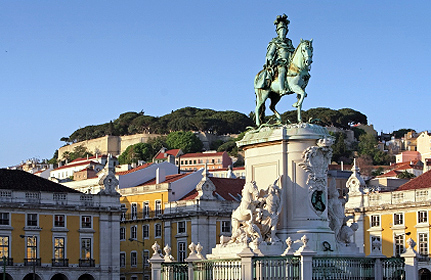
Lisbon is the capital of Portugal since 12th century. This legendary city has a rich and impressively integrated diversity and a history of over 20 centuries. Radiant skies brighten the monumental city, with its typical tile covered building facades and narrow Medieval streets, where one can hear the fado being played and sung at night. But Lisbon is also the stage for popular festivities, the place for exquisite shopping, exciting nightlife, and interesting museums, a place of neighborhoods. 
Photo Credits: www.trekexchange.com
 Facts:
Currency: Euro
Language: Portuguese
Time Difference: 5 ½ hr behind IST
Best Time to Visit: Feb-June is ideal

Get in:
Visa: Indian Nationals will require a visa to enter Portugal. Like other EU members Schengen Visa can be obtained prior to arrival in Portugal.
Flights: There are no direct flights from India to Lisbon. The major transit points are Paris, London, Istanbul, Dubai, and Frankfurt.

Getting Around:
Metro: The underground metro is the best to tour Lisbon. The Metro stations are highly decorated and it’s a real treat to see.http://www.metrolisboa.pt/
Trams: Trams/streetcar is good for short hops between crisscross streets. The tickets can be bought from outlets, driver or the machine in the tram. http://www.carris.pt/
Suburban Trains: Suburban trains is the best connection to Belem, Estoril and Cascais
Funiculars and Elevadores: Take advantage of these rope ways to navigate the hilly areas.
Bicycle and Foot: Lisbon is city of seven hills. Hence cycling and thumbing the hilly terrains is quite a challenge.
Car: Taxi is a economical if you are considering sharing among three or four people. However, renting a car might be a disadvantage since parking is a pain and the streets are jammed during peak hours.

Attractions:
The major attraction in Lisbon is the city itself. Here is a list of major attractions:
Jeronimos Monastery – A world Heritage Site. It was once the place of resting for Vasco da Gama.
Belem Towers – Lisbon’s iconic tower and also a symbol of age of Discovery
Gulbenkian Museum – A treasure from East to West
Berardo Museum of Modern and Contemporary art – A great collection of Modern and contemporary Arts
Ocenarium – A sea odyssey in a state of art building
St. George Castle – Millennium old Walls overlooking the city
Ancient Art Museum – Fascinating Oriental and European art
Coach Museum - Houses the world’s largest collection of Coaches and Royal vehicles
Downtown Baixa – Located in the center of Lisbon, the area was reconstructed entirely after an earthquake in 18th centaury.
Ajuda Palace – A neoclassical monument in the city

Photo Credits: http://www.theworldeffect.com
 Do:
1. Spend a evening in a Fado themed restaurant
2. Ride a tram in the old Quarter (Tram 28)

Events:
March – Lisbon Fashion Week (ModaLisboa)
April – Dias Da Musica (Classical Music concert)
May – Rock in Rio (Biggest Music Entertainment Event), Ola Love 2 Dance (Annual Dance Festival)
June – Gay Pride, Alkantara Festival (Street Festival)
July – Sparkling Party
August - Jazz em Agosto – (Jazz Festival)
October – Lesboa Party (Dance Party)
November - Luzboa - International Lighting and Urban Art Bienal
December – New Year’s Eve Party

Tips:
1. Lisboa Card grants access to all public transport (buses, metro, tram and even CP trains to nearby places). Free entrance or discounted entry fee to many attractions) http://www.golisbon.com/Lisboa-Card/
2. Many attractions are closed on Monday
3. Most Monuments has free entry on Sunday until 2PM

Side-trips:
1. Sintra – A beautiful UNESCO World Heritage Site, 30 mins by car/train from Lisbon
2. Evora – A Museum town less than 2 hours away by express bus/car from Lisbon

Tokyo – A city of contrast

Tokyo, Japan, is a city of contrast, where future innovations in technology unfold in the center of old heritage and tradition. In this crowded city, shrine and temple stand side by side with tall and modern architecture. Advanced technology, craze for animation, youth culture, beautiful parks makes the city overwhelming. The land of rising sun is a great destination for anyone looking for everything during their vacation.
Imperial Palace, Tokyo, Japan. Photo-credits: www.weirdlyodd.com
Quick Facts:
Language: Japanese
Currency: Yen 
(Exchange Rate: 100 INR = 183 YEN, at the time of the post)
Time Difference: 3 ½ hrs ahead of IST

Best Time to Visit:
Spring (March-May) – The famous cherry blossom happens in March – April, when the cherry trees blossoms and turns into a shade of pink, making parks beautiful and picture perfect. The temperature is warm. There are many festivals during these months

Autumn (Sep - Nov) – The temperature and humidity is tolerable. The trees also change colors and it is as impressive as cheery blossom.

Get-in:
Visa:
Tourist Visa must be obtained from Japanese Embassy/Consulate prior to arrival. The Visa is valid for 90 days and can be extended for another 30 days. Passport, Visa application, Photo, Flight ticket confirmations and Certificate of Income/ Certificate of Deposit balance to prove travel expense are required. Additional documents or sponsorship might also be required. Once in Japan, one must carry his passport at all times, if found without passport, one can be fined up to 2,00,000 YEN.
Flights:
Direct Flights: Air India has a direct flight from Delhi to Tokyo.
Transit Flights: Kuala Lumpur, Bangkok, and Beijing are some major transit points for Tokyo, Japan
Boat: There are ferries from Korea, China, Taiwan and Russia to the major ports of Japan

Getting around:
In Tokyo, train and subways are the most efficient means of transport. It is crowded and confusing at time. It’s best to analyze the Subway map before boarding. Passes and prepaid cards are available. Buses and ferries are also available in areas where subways are not present.
Photo credits: www.weirdlyodd.com
Attractions:
Tokyo has a number of attractions parks, temples, shrines, markets etc. The below link has the attractions divided by area: http://www.japan-guide.com/e/e2164.html. Most of the tourists spend 3 – 5 days in Tokyo. There is a must see list:
  1. Shinjuku – The area around the busiest railway station in Japan. Place to see cosmopolitan city.
  2. Shibuya - The trendy and fashionable shopping district
  3. Akihabara – The electronic device market
  4. Ueno Park – Has temples, shrines, museums and a large pond
  5. Imperial Palace and Garden – Residence of the imperial family of Japan
  6. Tsujiki Fish Market – Japan’s largest fish market
  7. Tokyo Towers – The symbol of Tokyo
  8. Asakusa(Sensoji temple & Nakamise)
Do:
  1. On a Sunday, head to Harajuku to witness the fashion and cosplay culture of Tokyo teens
  2. Try Sushi
  3. Get a great view of the city from the Tokyo Metropolitan Government building for free
  4. Visit Ginza, the premier shopping district
  5. Stay in a capsule
  6. Visit the theme parks and enjoy some adrenal rushing rides
Tips:
  1. Japan Rail Pass is great option if traveling in whole of Japan
Side Trips:
  1. Kamakura – Small city with full of historic treasures
  2. Hakone – National Park with the view to Mount Fuji
  3. Nikko – A world Heritage Site

Powered by Blogger