Great Barrier Reef, Australia

 The Great Barrier Reef is one of the seven wonders of the natural world, viewing it from greater distance one can understand why. It is larger than the Great Wall of China, stretching over 3000 km almost parallel to Queensland coast, from the coastal town of Bundaberg up to the tip of Cape York. It is also the only living thing on earth visible from space.

The reef, between 15 km and 150 km off the shore and around 65 km in some parts, is a gathering of brilliant, vivid coral providing divers with the most spectacular underwater experience imaginable. A closure encounter with the Great Barrier Reef’s impressive coral garden reveals many astonishing underwater attractions including the world’s largest collection of corals (about 400 different kinds), coral sponges, dolphins, molluscs, rays, tropical fishes (about 1500 species), birds, turtles and clams. In recognition of its significance, The Great Barrier Reef was listed in the UNESCO World Heritage Sites in 1981.

The Great Barrier Reef’s islands are simply enchanting. There are over 100 islands, scattered off the coast of Queensland. Some islands are continental islands and some are coral clays. Some islands have marine life and some don’t. Some have standard accommodation facilities and many are not on the reef.
 
Reef tourism has rapidly grown over the recent times; there are approximately 820 operators and 1500 vessels operating in the Marine Park. There is a diverse range of tourism operation in the Great Barrier Reef. The popular tours are days trips, overnight trips, snorkeling trip, scuba diving trip, helicopter tours, hot air ballooning tour, fishing charter, glass-bottomed boat tour, cruise ships, beach hires, water sports, whale watching, swimming with dolphin and many more.

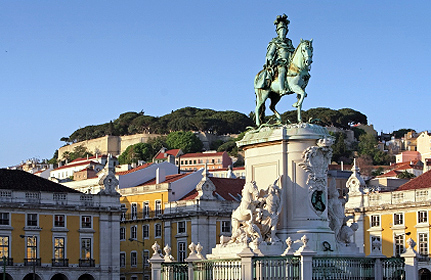
Lisbon –Monuments, colorful streets and squares

Lisbon is the capital of Portugal since 12th century. This legendary city has a rich and impressively integrated diversity and a history of over 20 centuries. Radiant skies brighten the monumental city, with its typical tile covered building facades and narrow Medieval streets, where one can hear the fado being played and sung at night. But Lisbon is also the stage for popular festivities, the place for exquisite shopping, exciting nightlife, and interesting museums, a place of neighborhoods. 
Photo Credits: www.trekexchange.com
 Facts:
Currency: Euro
Language: Portuguese
Time Difference: 5 ½ hr behind IST
Best Time to Visit: Feb-June is ideal

Get in:
Visa: Indian Nationals will require a visa to enter Portugal. Like other EU members Schengen Visa can be obtained prior to arrival in Portugal.
Flights: There are no direct flights from India to Lisbon. The major transit points are Paris, London, Istanbul, Dubai, and Frankfurt.

Getting Around:
Metro: The underground metro is the best to tour Lisbon. The Metro stations are highly decorated and it’s a real treat to see.http://www.metrolisboa.pt/
Trams: Trams/streetcar is good for short hops between crisscross streets. The tickets can be bought from outlets, driver or the machine in the tram. http://www.carris.pt/
Suburban Trains: Suburban trains is the best connection to Belem, Estoril and Cascais
Funiculars and Elevadores: Take advantage of these rope ways to navigate the hilly areas.
Bicycle and Foot: Lisbon is city of seven hills. Hence cycling and thumbing the hilly terrains is quite a challenge.
Car: Taxi is a economical if you are considering sharing among three or four people. However, renting a car might be a disadvantage since parking is a pain and the streets are jammed during peak hours.

Attractions:
The major attraction in Lisbon is the city itself. Here is a list of major attractions:
Jeronimos Monastery – A world Heritage Site. It was once the place of resting for Vasco da Gama.
Belem Towers – Lisbon’s iconic tower and also a symbol of age of Discovery
Gulbenkian Museum – A treasure from East to West
Berardo Museum of Modern and Contemporary art – A great collection of Modern and contemporary Arts
Ocenarium – A sea odyssey in a state of art building
St. George Castle – Millennium old Walls overlooking the city
Ancient Art Museum – Fascinating Oriental and European art
Coach Museum - Houses the world’s largest collection of Coaches and Royal vehicles
Downtown Baixa – Located in the center of Lisbon, the area was reconstructed entirely after an earthquake in 18th centaury.
Ajuda Palace – A neoclassical monument in the city

Photo Credits: http://www.theworldeffect.com
 Do:
1. Spend a evening in a Fado themed restaurant
2. Ride a tram in the old Quarter (Tram 28)

Events:
March – Lisbon Fashion Week (ModaLisboa)
April – Dias Da Musica (Classical Music concert)
May – Rock in Rio (Biggest Music Entertainment Event), Ola Love 2 Dance (Annual Dance Festival)
June – Gay Pride, Alkantara Festival (Street Festival)
July – Sparkling Party
August - Jazz em Agosto – (Jazz Festival)
October – Lesboa Party (Dance Party)
November - Luzboa - International Lighting and Urban Art Bienal
December – New Year’s Eve Party

Tips:
1. Lisboa Card grants access to all public transport (buses, metro, tram and even CP trains to nearby places). Free entrance or discounted entry fee to many attractions) http://www.golisbon.com/Lisboa-Card/
2. Many attractions are closed on Monday
3. Most Monuments has free entry on Sunday until 2PM

Side-trips:
1. Sintra – A beautiful UNESCO World Heritage Site, 30 mins by car/train from Lisbon
2. Evora – A Museum town less than 2 hours away by express bus/car from Lisbon

Ferrari World, Abu Dhabi


The iconic red Ferrari logo roofed building of Ferrari World amusement Park is the first Ferrari theme park. This world’s largest indoor amusement park is located in Yas Island, Abu Dhabi. Yas Island also boosts the Yas Marina circuit, home of Formula 1 Abu Dhabi Grand Prix.

Ferrari World comprises of over 20 Ferrari inspired attractions which include Formula Rossa, the world’s fastest roller coaster, operating at a speed of 240 km/hr. There are rides and entertainments for children, family and adults. The theme-park also houses the largest Ferrari Store in the world, where the guests can buy the Ferrari merchandise and even personalize them. Dining and accommodation are also available on the Island.
Getting there:
The ‘Ferrari World’ can be reached by car. If you don’t own one, hire a Taxi
Ticket Information:
General Admission: Unlimited access to all rides and attractions and a single entry into the park which is valid for 6 months from the day of purchase
Adult: AED 225 [Rs. 2800 approx.]
Child: AED 165 [Rs. 2000 approx.]
Premium Admission: Unlimited access to all rides and attractions through fast track lane and a single entry into the park which is valid for 6 months from the day of purchase. Also, an exclusive access to VIP lounges.
Adult: AED 495 [Rs. 6150 approx.]
Child: AED 390 [Rs. 4600 approx.]
Opening Hours:
Tue-Sun [12:00 – 22:00]. Park is closed on Monday.
Tip:
It’s best to avoid the park during the F1 season in Abu Dhabi, since the park might be reserved only for Teams.

Flamenco Show in Spain


A trip to Spain is incomplete without a Flamenco show. Flamenco is a style of music and dance which is native in southern region of Spain. Flamenco origin like many other folk art forms is unknown. Flamenco is expressed using guitar, song and dance. Flamenco is also listed in UNESCO Intangible Cultural Heritage.
photo credit: www.garrett-axford.co.uk
Flamenco shows is a must do in Spain. The best Flamenco can be seen in “Tablaos” Flamenco restaurants. “Tablaos” are establishments with their own performers. The major cities and tourist spots of Spain have many Tabload Flamenco restaurants. The typical Flamenco show is a drink (wine) + show or dinner (Tapas) + show. The show starts timings might vary but the ideal duration is 1 ½ to 2 hours. The price also varies depending on the city, restaurant and the Tablaos.

If you are packing your bags to Spain, do not miss Flamenco show and entice in the harmony of the music, dance and food.

Potala Palace, Lhasa, Tibet

Perched on the top of the Marpo Red hill in the center of the city of Lhasa, the red and white Potala Palace is the highest ancient palace in the world. The palace is a symbol of Lhasa and a UNESCO world heritage site.

Potala palace was originally built by King Songtsan Gambo in 7th century for his bride Princess Wenchang. The palace he built had 9 stories, 999 palace chambers and 1000 meditation halls. As the Songtsan Gombo Dynasty collapsed, the ancient fortress like palace was destroyed in wars. The modern Potala palace was rebuilt in 17th century by The Great fifth Dalai Lama, Lozang Gyatso of Qing Dynasty. 
Photo credits: wallpapers.free-review.net
The main architecture of the Potala Palace is composed of two parts:
The Red Palace – The places used by the Dalai Lama as his living chamber and for political activity. The palace occupies 10,000 square meters, where the statues of King Songstan Gambo and Princess Wencheng along with many hundreds of Buddhist figures are kept for worship.
The White palace – is a 7 storey palace which has various halls to deal with Buddhist activities. The 4th storey called the eastern hall is most important Buddhist hall where major religious and political activity, including the enthronement ceremony for reincarnated soul of the Dalai Lama was held. The seventh floor, sunshine hall was the winter palace of Dalai Lama.

Now, a museum, the palace is a must visit. An ancient history, murals, stupas, statues, thangkas and rare sutras attracts a number of visitors. The palace has a lot of stair cases up and down and located at a high peak hence acclimate to the weather condition before visiting.

Getting there: Located in the city center, it can be reached easily by foot, taxi or tricycle
Admission Fee: CNY 100 (Nov-April) CNY 200 (May-Oct). Only 2300 tickets are issued per day [1600 for the travel agent and 700 for individual tourist]
Opening hours: 09:00 – 16:00 

1 CNY = Rs. 6.8

Powered by Blogger